
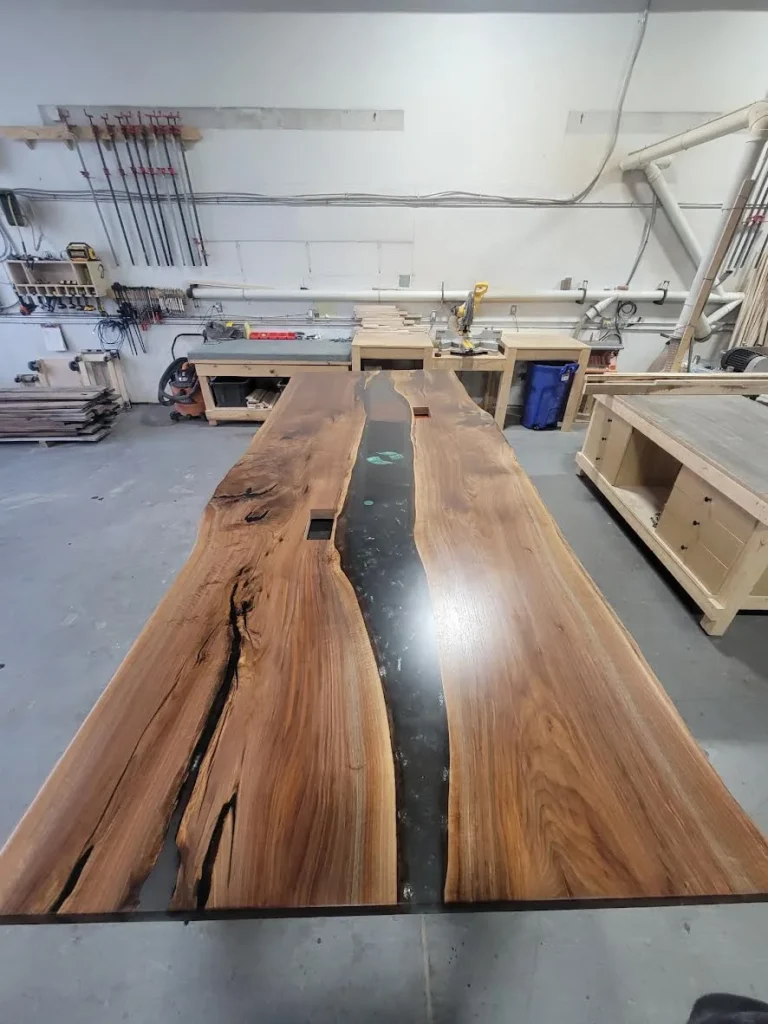
If you’ve started browsing custom wood furniture, you’ve probably run into these two terms over and over: epoxy river and live edge. They’re often mentioned together, sometimes used interchangeably, and occasionally combined into the same table — which makes the difference between them confusing if you’re ordering your first custom piece.
The two styles aren’t competitors so much as two different tools for showing off the same thing: a solid wood slab. Which one is right for you comes down to the room the table is going in, how you want it to look, and how it needs to perform over time. Here’s how to tell them apart and choose with confidence, whether you’re furnishing a dining room, a law firm reception area, or a corporate boardroom.
What Is a Live Edge Table?
A live edge table is milled from a solid wood slab that keeps the tree’s natural outer edge intact, rather than cutting it into a perfectly straight rectangle. The result is a table where every edge is unique — following the actual contour of the tree it came from, bark line and all.
Live edge furniture works especially well when the grain and shape of the wood are the whole point. A wide black walnut or maple slab with strong figure doesn’t need much dressing up; the live edge just lets the material speak for itself. It’s a popular choice for dining tables, reception desks, and boardroom tables where a natural, organic feel fits the space.
What Is an Epoxy River Table?
An epoxy river table starts with two (or more) live edge slabs, usually cut from the same log, positioned with a gap between them. That gap is filled with a poured epoxy resin — clear, tinted, or opaque — creating a smooth “river” running through the center of the table.
Beyond solving a practical problem (turning irregular slabs into a usable flat surface), the epoxy pour becomes a design feature in its own right. Color can be matched to a brand palette, mixed with metallic mica powders for a shimmer effect, or poured completely clear to let the grain show through underneath. It’s also possible to embed a logo or object directly into the resin — a detail we’ve covered in more depth in our guide to branding custom wood furniture with embedded logos.
The Key Differences
Look: Live edge keeps the focus entirely on the wood — texture, bark, and natural shape. Epoxy river adds a second focal point: color, depth, and often a glass-like shine down the center of the table.
Slab requirements: Live edge tables can be built from a single wide slab. Epoxy river tables typically use two narrower slabs, which opens up more design flexibility (color, width, shape of the “river”) but adds an extra material and pour process.
Cost: Epoxy river tables generally cost more than a comparable live edge table, since resin, color-matching, and curing time add both material and labor to the build.
Build time: Epoxy needs time to cure properly between pours, especially on larger tables. If timeline matters for your project, it’s worth reading our breakdown of why custom wood furniture takes longer than you’d expect before setting expectations.
Maintenance: Both styles hold up well with proper finishing, but epoxy resin surfaces are generally more resistant to moisture rings and everyday wear, which matters in high-traffic settings like boardrooms and reception desks.
Neither option is objectively “better” — they’re suited to different priorities. A live edge table leans into raw, natural character. An epoxy river table adds a deliberate design element and a bit more durability where it counts.
Which Should You Choose? It Depends on the Room
For a home dining table: Live edge is a natural fit if you want the wood grain to be the centerpiece of the room, especially in a rustic, farmhouse, or modern-organic interior. Epoxy river dining tables are equally popular for a more contemporary look, particularly when a specific color needs to tie into the rest of the room.
For a law firm or reception area: Durability and presentation both matter here. An epoxy river table in a deep walnut with a clear or subtly tinted pour tends to read as polished and professional without losing the warmth of natural wood.
For a corporate boardroom or office: This is where the two styles get used most deliberately — branding, durability, and visual impact all come into play at once. If you’re specifically furnishing a boardroom, our sister site has a detailed breakdown of 7 custom boardroom table design ideas pulled from real corporate projects, covering everything from large-format solid wood builds to branded epoxy river statement tables. It’s a useful next stop if you want to see finished examples before settling on a direction. You can also review the full list of boardroom table features worth considering, like integrated power and cable management.
Wood Species Still Matters, Either Way
The style you choose — live edge or epoxy river — sits on top of a more fundamental decision: the wood itself.
- Black walnut offers a rich, dark tone that pairs especially well with epoxy pours, since the contrast between wood and resin really stands out.
- Maple brings a lighter, cleaner look that suits both styles, and holds up well in high-use settings.
- Oak offers bold, visible grain and strong structural stability, making it a solid choice for larger tables regardless of style.
Browse our epoxy river table gallery and boardroom table projects to see how each species looks across different finishes before you decide.
How to Start Your Custom Build
- Decide on the room and purpose — home, reception, or boardroom — since that narrows down size, shape, and durability needs.
- Pick a style direction, live edge or epoxy river, based on the look and budget that fits your space.
- Choose a wood species that matches your interior and how heavily the table will be used.
- Request a free quote with your rough dimensions and any must-have features, and a specialist will help refine the design from there.
Frequently Asked Questions
Is an epoxy river table more expensive than a live edge table? Generally, yes. The extra resin, color-matching, and curing time involved in an epoxy pour add to both material and labor costs compared to a straightforward live edge build.
Can I combine both styles in one table? Yes — many tables use live edge slabs on the outer sides with an epoxy river running down the center, which is actually the most common way epoxy river tables are built in the first place.
Which option is more durable for daily use? Both hold up well with a proper finish, but epoxy resin surfaces tend to resist moisture and everyday wear slightly better, which is part of why they’re popular for boardrooms and reception areas.
Ready to Design Your Table?
Whether you’re leaning toward a live edge dining table or a branded epoxy river boardroom piece, the best next step is the same: get in touch for a free quote with your dimensions, wood preference, and space in mind, and we’ll help you land on the right build from there.
