
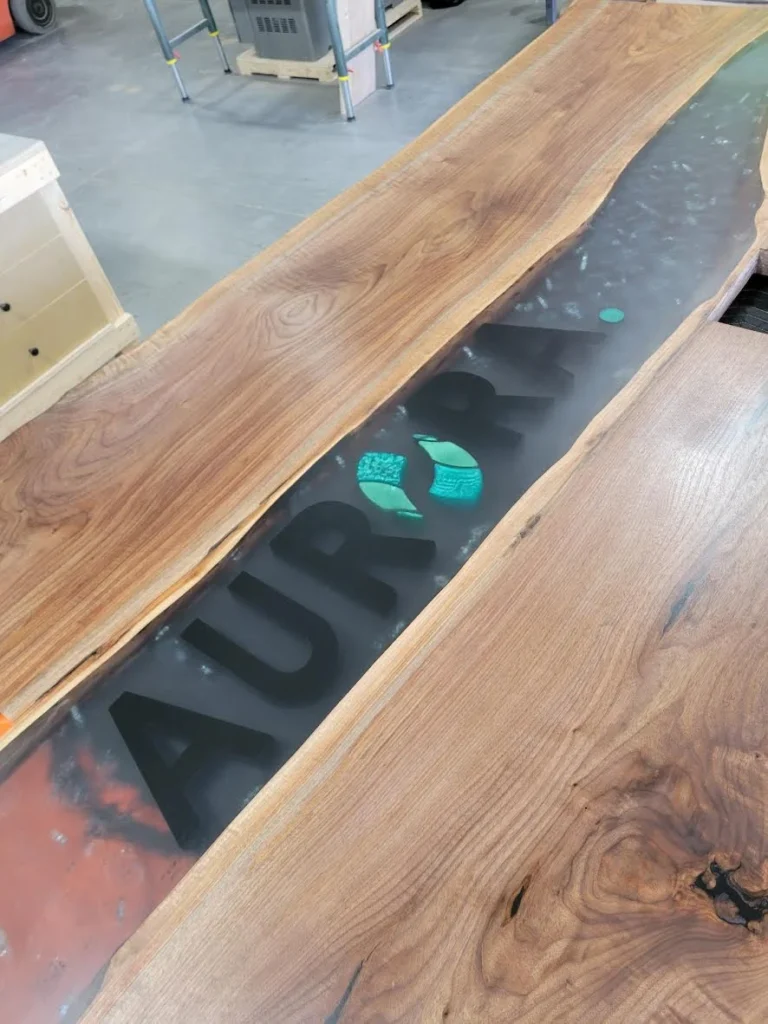
A logo printed on a sign or a wall decal is easy to walk past without noticing. The same logo built into a piece of furniture people actually sit around every day is a different story — it becomes part of the room rather than decoration in it. This is a common request for custom conference tables, reception desks, and other commercial wood furniture, and there are a few genuinely different ways to achieve it, each with its own look and durability.
Wood Inlay
The most traditional method: a logo built from individual pieces of contrasting wood species, cut and fitted directly into the surface. Because it’s made from real wood rather than applied to it, an inlay ages the same way the rest of the piece does — it can be sanded, refinished, and touched up right along with the surrounding surface for as long as the furniture lasts. This method suits simple, bold logo shapes best, since intricate detail is harder to translate into individual wood pieces.
CNC Engraving With Resin Fill
A newer, increasingly popular method: the logo is precisely carved into the wood using CNC routing, then filled with tinted epoxy resin. This handles fine detail and multiple colors far better than inlay work, and it pairs naturally with pieces that already use resin elsewhere in the design — an epoxy river table, for example, can have its logo filled in a resin color that echoes the rest of the piece.
Printed or Overlay Logos
The fastest and most budget-friendly option: the logo is printed onto a durable laminate or vinyl and applied to the surface. This is the only method that handles complex, multi-color, or photographic logos with real fidelity — but because it sits on top of the wood rather than becoming part of it, it’s more prone to wear at the edges over years of heavy use compared to inlay or engraved-and-filled work.
Matching the Method to the Logo
- Simple, bold shapes → wood inlay
- Detailed or multi-color logos → CNC engraving with resin fill
- Complex or photographic logos → printed overlay
The right choice usually comes down to what the logo actually looks like, more than personal preference for one method over another.
Getting the Placement Right
Where a logo sits matters as much as how it’s made. Centered at one end of a table reads as a formal, head-of-table statement. Centered along the middle keeps it visible to everyone around a room. On a reception desk or countertop, it’s usually positioned to be the first thing a visitor sees walking in. Planning placement alongside the wood species, shape, and finish — rather than as an afterthought once the piece is otherwise finished — is what makes the branding read as intentional rather than added on.
For a deeper look at how this plays out specifically on boardroom and conference tables — including how logo integration pairs with epoxy river designs — the.Boardroom’s guide on adding a company logo to a custom boardroom table covers the process in more detail.
